Tag: lifestyle

  • Simplicity in Growth. 8

    A stone on soft moss—

    Stillness shapes the growing path— Less becomes enough.

    It began with a single rock placed carefully in the middle of a garden. Not a polished stone, but one rough and irregular, its surface marked by years of wear. A gardener stood nearby, brushing loose dirt from their hands. The garden wasn’t crowded with flowers or ornaments; there were only a few deliberate choices: the rock, a patch of moss, a bamboo fountain dripping water in a slow, rhythmic cadence. The space felt complete, as though nothing more could be added without taking something away. Simplicity, I realized, isn’t emptiness. It’s intention.
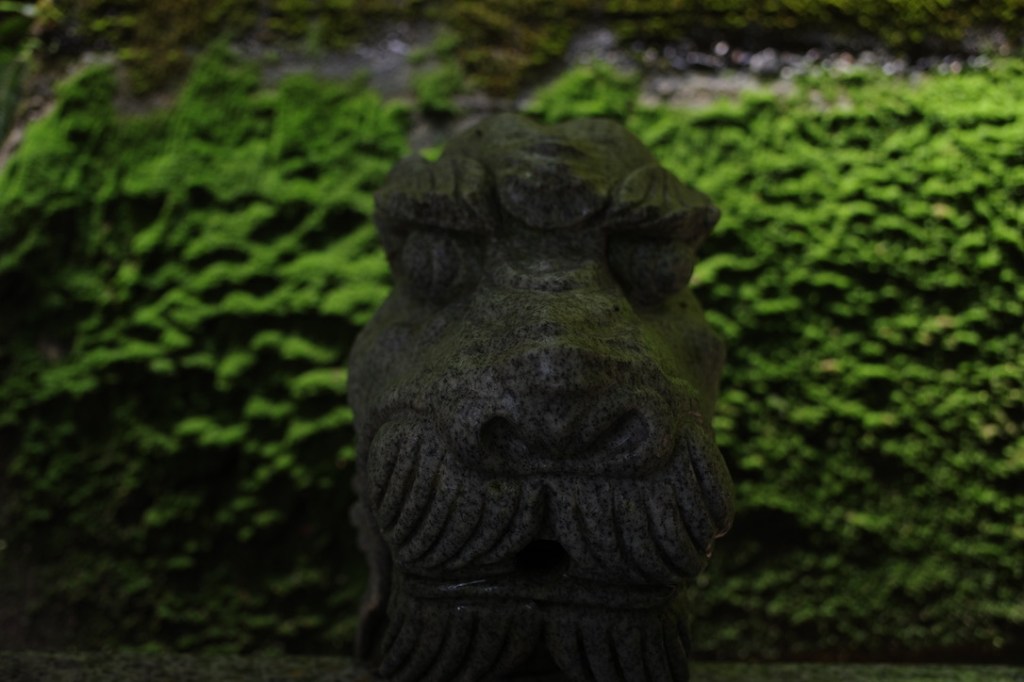
    The Elegance of Simplicity

    Simplicity is hard to build but easy to live. Complexity, on the other hand, is easy to create but burdensome to carry. This truth doesn’t just apply to design or technology; it’s a reflection of our lives, our growth, and our personal worth. We are drawn to complexity because it feels sophisticated, valuable, even necessary. But often, it’s simplicity that holds the real power.

    Imagine your personal growth as a garden. Simplicity is planting a few essential seeds and tending to them daily. Complexity is overloading the soil with too many plants, leaving no room for any of them to thrive. One approach creates focus and clarity, while the other breeds chaos and overwhelm.

    Why We Gravitate Toward Complexity

    Complexity feels impressive. It’s easier to fill your schedule with endless tasks, to pile on goals and commitments, to keep adding layers to your identity. But this kind of growth is hollow. Complexity creates the illusion of progress while pulling you further from your core.

    In our pursuit of worth, we sometimes believe that more is better. More responsibilities, more skills, more accomplishments. But when everything is important, nothing truly is. Complexity dilutes our efforts, scattering them like leaves in the wind. Simplicity, by contrast, grounds us. It asks us to choose what truly matters and to let go of the rest.

    The Hard Work of Simplicity

    Simplicity is not about doing less; it’s about doing what matters most. It’s about stripping away the noise to find the signal. This process is neither easy nor comfortable. It requires honesty, discipline, and the courage to say no—to distractions, to unnecessary obligations, and even to opportunities that don’t align with your purpose.

    But once simplicity is achieved, it becomes a foundation. A life built on simplicity is easier to navigate, more fulfilling, and more sustainable. It frees you to focus on growth that feels meaningful, not just impressive.

    Personal Worth Through Simplicity

    Your personal worth isn’t defined by how much you do or how complicated your life appears. It’s defined by how deeply you engage with what truly matters to you. A simple life—focused on your values, your passions, your relationships—carries a quiet kind of strength. It’s not flashy, but it’s unshakable.

    When you build your worth on simplicity, you free yourself from the exhausting need to prove anything to anyone. Your value becomes intrinsic, not tied to external validation or endless achievements. It’s a rare kind of freedom, one that complexity can never offer.

    How to Embrace Simplicity in Growth

    1. Prioritize Ruthlessly: Identify what truly matters to you and focus on those things. Let go of what doesn’t serve your purpose.
    2. Declutter Your Commitments: A packed schedule isn’t a sign of success. It’s often a distraction. Make space for what’s meaningful.
    3. Embrace the Hard Work of Clarity: Simplifying your life requires effort and reflection. Be willing to do the work.
    4. Seek Depth, Not Breadth: Focus on mastering a few things instead of dabbling in many. Depth creates value; breadth creates noise.
    5. Let Go of External Validation: True worth isn’t built on how others perceive you. It’s built on living authentically and intentionally.
    6. Celebrate Small Wins: Simplicity finds joy in the little things. Recognize the beauty of progress, no matter how small.

    Simplicity doesn’t shout; it whispers, drawing you closer to its quiet wisdom.

    Your personal growth is no different. Complexity may look impressive from a distance, but it’s simplicity that creates a life of substance. By focusing on what truly matters, you build something enduring. And in the process, you discover that simplicity isn’t just elegant—it’s transformative.

    As I left the garden, the sound of the bamboo fountain stayed with me, each drip falling with perfect intention. The rock stood silent in its place, unassuming yet powerful. It needed nothing more. In that moment, I understood: simplicity isn’t a lack of complexity. It’s the presence of clarity. And in clarity, there is peace.

  • Human Life in a Digital World. 2

    A crack in the digital light

    It began with a sound. Not a loud one—a faint buzz, the kind you hear when an old streetlamp flickers in the distance. I was walking down an empty alley, late enough that the world felt abandoned, save for the hum of unseen electricity. Somewhere, a vending machine whirred to life, its lights casting a pale blue glow on the pavement. The alley was ordinary, unremarkable, but the way the artificial light caught on the cracks in the concrete made it feel like I’d stepped into another dimension.

    Humans are inherently chaotic, crazy, and sometimes wildly unpredictable. This is not a flaw; it is our defining characteristic. In a world increasingly dominated by algorithms and structured systems, our disorderly nature becomes an invaluable asset. While machines follow code and logic, we follow intuition, emotion, and whims that cannot be explained or replicated. Our chaos is the fertile ground where creativity and innovation take root.

    The rise of artificial intelligence and digitalization has transformed the landscape of human existence. Algorithms now write poetry, craft melodies, and solve problems once thought to require the spark of human creativity. We live in a world where machines operate with precision, optimizing every process, leaving no room for error or waste. And yet, it is precisely this perfection that reveals their limitation—a hollowness, a lack of the ineffable quality that makes us human.

    The Age of Machines and the Art of Being Human

    This blog, The Wabi-Sabi of Human Life, is not a guide to resisting technology but a call to embrace what makes us irreplaceable within it. In a world driven by clean lines, sharp edges, and flawless logic, our imperfections, our quirks, and our messy uniqueness become not liabilities but assets. It’s our humanity—flawed, unpolished, and endlessly complex—that will define our place in the future.

    Machines thrive on replication. Give them a task, and they will execute it with precision, faster and more consistently than any human ever could. But the world’s greatest breakthroughs have rarely come from flawless execution. They have come from mistakes, from accidents, from moments of doubt and leaps of intuition that no algorithm can predict.

    Think of the artist who discovers a new technique by spilling paint on the canvas. The scientist who stumbles onto a groundbreaking discovery while chasing a dead end. The entrepreneur whose failed business reveals an unexpected opportunity. These are not stories of perfection; they are stories of wabi-sabi—of finding beauty and possibility in the imperfect and the unexpected.

    Imperfection as Strength

    As we navigate this new digital age, the value of our imperfections will only grow. Machines can analyze data, but they cannot feel. They can simulate empathy, but they cannot experience it. They can replicate patterns, but they cannot create something that defies the rules. The cracks in our logic, the gaps in our understanding—these are the spaces where creativity is born.

    The key to thriving in the age of AI is not to compete with machines but to leverage what makes us unique. It is not enough to be different; we must make that difference meaningful. To do so requires a shift in perspective. Instead of hiding our imperfections, we must lean into them. Instead of striving for sameness, we must embrace the full spectrum of who we are.

    Start by asking: What can I do that no machine can replicate? The answer lies not in the rote tasks but in the spaces machines cannot reach—the emotional, the intuitive, the profoundly human. It lies in the ability to connect deeply with others, to imagine new possibilities, to navigate the gray areas that algorithms find so perplexing.

    The Role of AI in Enhancing Humanity

    Far from being a threat, AI can be a tool that enhances our humanity. It can take over the mundane, freeing us to focus on the meaningful. It can amplify our creativity, providing new tools for expression and innovation. But to use it well, we must remain grounded in our wabi-sabi selves. We must remember that efficiency is not the same as value, and precision is not the same as purpose.

    In this new landscape, the most impactful people will not be those who mimic machines but those who fully embody their humanity. They will be the ones who listen deeply, who adapt with grace, who see opportunities where others see problems. They will be the ones who are unafraid to show their cracks, knowing that these are the places where the light comes through.

    The Wabi-Sabi of Human Life is not a manual for perfection. It’s ideas to navigating a complex, ever-changing world by embracing the beauty of imperfection. It offers a framework for leveraging your uniqueness in ways that are both authentic and impactful.

    1. Find Strength in Flaws: Recognize that your imperfections are not weaknesses but sources of resilience and creativity.
    2. Adapt to Change: Use your inherent flexibility to thrive in a world where the only constant is transformation.
    3. Connect Deeply: Cultivate relationships that are rich, meaningful, and built on genuine understanding.
    4. Balance Technology with Humanity: Leverage the power of AI while staying true to the values that make life worth living.
    5. See the Beauty in Chaos: Learn to dance with uncertainty and find clarity in the midst of complexity.

    A cracked bowl is not discarded; it is mended with gold, turning its imperfection into its most striking feature. In the same way, this blog invites you to see your imperfections not as things to fix but as the essence of your strength.

    As I turned the corner out of the alley, the vending machine’s hum faded into the distance. The cracks in the concrete and the faint buzz of the streetlights felt less like imperfections and more like a part of a larger, imperfect symphony. The night sky, littered with stars partially hidden by clouds, seemed to echo a truth as old as time: perfection isn’t the goal—it’s the story within the flaws that makes life worth living.